



Front Light vs. Backlight: Understanding the Key Difference in Display Technology
When reading on an e-paper device in a low-light environment, such as by a fireplace or in a dim room, visibility becomes a key concern. Unlike traditional displays, e-paper screens rely on ambient light. This is where front light technology plays an essential role.
However, front light is often misunderstood and confused with conventional LED backlighting used in LCD displays. In reality, these two lighting methods differ significantly in both structure and visual experience.
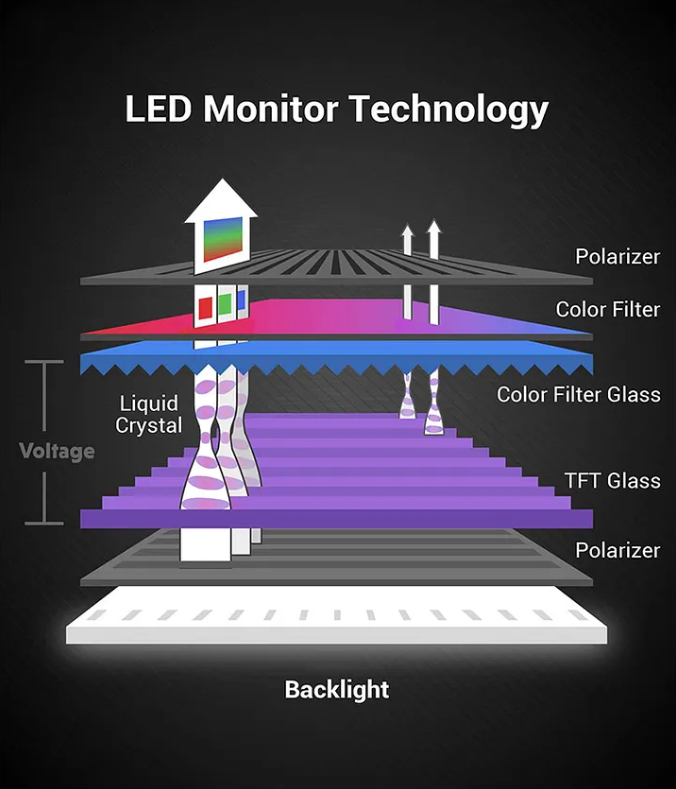
What Is a Backlight?

Backlighting is the standard illumination method used in LCD and LED displays. In this design, the light source is positioned behind the display panel, shining forward through the screen toward the viewer.
This structure allows for:
• High brightness and vivid colors• Uniform illumination across the display
• Suitability for dynamic content such as video and animation
However, because the light is emitted directly toward the eyes, prolonged exposure—especially combined with high refresh rates and blue light—may contribute to visual fatigue in certain use scenarios.
What Is a Front Light?

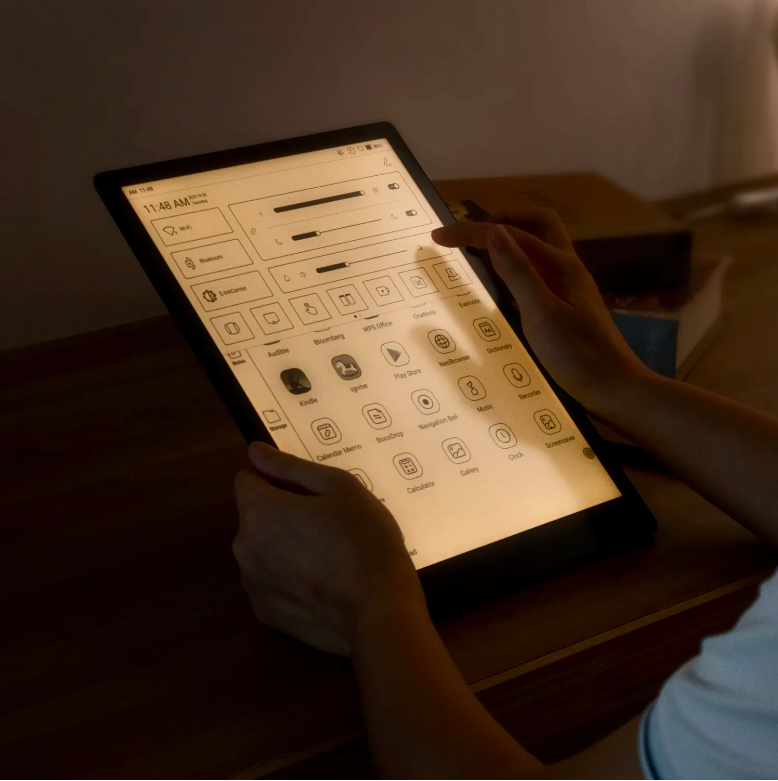
Front light is specifically designed for reflective displays, such as e-paper (E Ink). Instead of shining from behind, the light source is placed along the front edge of the screen, typically embedded within the bezel.
The light is then guided across the surface of the display, illuminating it indirectly—similar to how external light reflects off paper.
Key characteristics include:
• A paper-like reading experience• Reduced direct light exposure to the eyes
• Effective readability in low-light environments
• Lower power consumption compared to backlit display
Key Differences at a Glance
|
Feature |
Front Light |
Backlight |
|
Light Position |
In front of the display |
Behind the display |
|
Light Direction |
Reflected off the screen |
Emitted directly toward the eyes |
|
Typical Use |
E-paper / E Ink devices |
LCD / LED displays |
|
Visual Experience |
Soft, paper-like |
Bright, vivid |
|
Eye Comfort |
Generally more comfortable for reading |
May cause fatigue over long use |
Design Considerations
While front light provides a comfortable viewing experience, achieving uniform brightness across the screen can be technically challenging—especially for larger displays. It requires precise optical design, including light guides and diffusion layers, to ensure consistent illumination.
Backlight systems, by contrast, benefit from mature manufacturing processes and are easier to scale for larger panels with consistent brightness.
Choosing the Right Technology
The choice between front light and backlight depends on your application:
• For reading, note-taking, or prolonged viewing, front-lit e-paper displays offer a more natural and comfortable experience.• For multimedia, color-rich content, or high refresh applications, backlit LCDs remain the preferred solution.
Conclusion
Front light and backlight technologies serve different purposes and are optimized for different user experiences. Understanding their differences can help you select the most suitable display solution for your product or application.
As display technologies continue to evolve, both lighting approaches will remain essential—each addressing specific needs across diverse use cases.


 Microsoft Teams
 WhatsApp
 Email
Email Inquiry
 WeChat
 TOP
TOP